

Hytale Roadmap 2026+: What’s Confirmed, What’s Planned, and What’s Still Wait and See
This Hytale roadmap 2026 guide highlights what’s confirmed, what’s planned, and what’s still wait-and-see after Early Access.
Hytale has finally entered Early Access (January 13, 2026) — but if you’re looking for a single neat “2026 roadmap image” with quarters and checkboxes, the developers have been explicit: the roadmap isn’t fully pre-planned because they want to respond to real player feedback now that the game is in people’s hands.
That doesn’t mean there’s no direction. Between official development updates, Early Access announcements, design blogs (especially world generation), and patch notes from the first weeks, we can piece together a high-confidence roadmap: what the studio has already committed to, what systems are in-flight, and what’s a longer-term ambition.
Below is a “sources-first” roadmap written to separate:
- Confirmed / already shipping
- Near-term priorities (Early Access cadence)
- Medium-term pillars (systems and content they’re actively building)
- Long-term bets (big expansions and platform goals)
Hytale roadmap 2026: TL;DR snapshot
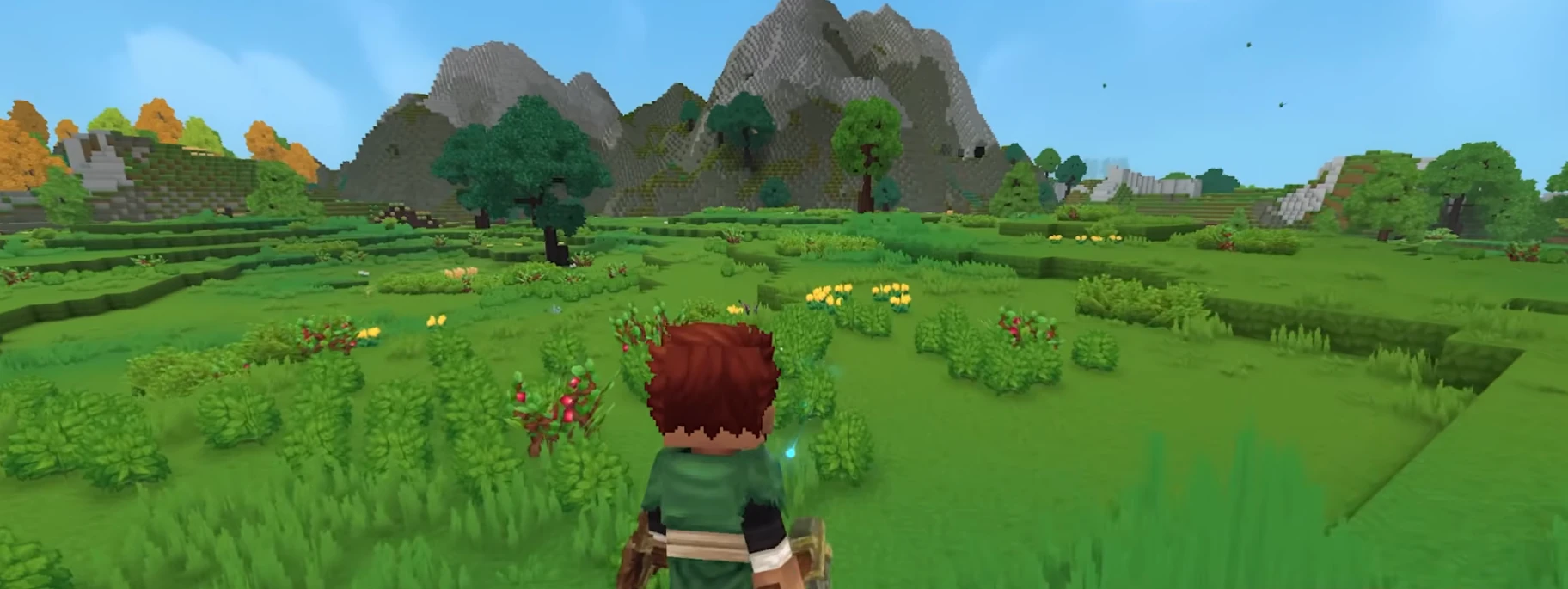
Now (Early Access launch + first weeks):
- Rapid iteration via frequent updates + hotfixes, heavy focus on stability, QoL, balance.
- First content drops already landed (Update 1 and Update 2).
Next (Early Access short-term priorities):
- Performance improvements and tech/stability work.
- Modding + creator pipeline improvements (tooling, docs, asset structure modularity).
- Continued content iteration in Exploration/Creative while the team gathers feedback.
Then (major medium-term inflection):
- Transition toward World Generation V2 becoming the primary worldgen (Orbis on V2), with V2 content accessible earlier via “Gateways” and testing in pre-release builds.
Later (long-term):
- Bigger systemic expansions (procedural rivers/paths, procedural dungeons/structures, richer ecology, waterfalls, etc.).
- Platform expansion beyond PC, with console described as “later stage,” and Steam explicitly “not initially.”
1) Why Hytale’s “roadmap” looks different
The studio’s public messaging since launch has been consistent: Early Access is meant to be shaped by informed player feedback, and they don’t want to lock themselves into a rigid plan before they see how players engage with systems at scale.
This matters because Hytale has already lived through major resets:
- A multi-year technical pivot (engine rewrite) discussed openly in earlier updates.
- A high-profile cancellation/wind-down announcement in mid-2025, followed by the project being acquired and revived by original founders in late 2025.
- A rapid push to ship an Early Access build in January 2026, including merging hundreds of branches into a working release line.
So instead of “feature promises by date,” what we can reliably map is their sequence of priorities and dependency chain: the technical foundations they’re laying first, then the content and systems that build on top.
2) Timeline recap: how we got to the current roadmap
2022: The engine pivot (foundation work)
In the Summer 2022 development update, the team explained they decided to redevelop the engine (client and server) in C++, citing cross-platform ambitions, performance, and maintainability.
This period is important because it set up a multi-year emphasis on “build the tools and engine right,” even if it delayed external-facing milestones.
2023-2024: Tools, workflows, and staged development
By Winter 2023, they described bringing engine development fully in-house and running an external playtest milestone.
In Summer 2024, they outlined a more structured approach to feature maturity (first playable → first testable → alphas → betas), and emphasized that moving features into the new engine could be fast but “less predictable” in velocity during the hybrid stage.
Early 2025: Internal playtesting focus
The Spring 2025 update emphasized getting core gameplay fundamentals online in the new engine and ramping internal playtesting around movement, block placement, combat, crafting, inventory/hotbars, and creator-focused tools (copy/paste, undo/redo, etc.).
Mid 2025: Cancellation + shutdown news
In June 2025, development was publicly stated as ending and the studio winding down; major trade coverage documented the cancellation and shutdown.
(There’s also an official Hypixel forum post about ending development dated June 23, 2025.)
Late 2025 → Jan 2026: Revival and Early Access ship
In November 2025, Hytale’s team announced they had acquired Hytale and were returning toward the original vision, explicitly framing Early Access as rough, frequently updated, and expected to last at least a few years.
By late November 2025, they confirmed the Early Access date: January 13, 2026, and described moving back to an older legacy build and consolidating development branches to ship.
This history shapes the 2026 roadmap: ship playable core + creator tools first, then expand the world, systems, and platforms.
3) Roadmap pillar #1: Early Access cadence (stability + iteration)
The first and most concrete “roadmap” item is simply: patch fast, patch often.
What’s already shipped (first two updates)
Update 1 (Jan 17, 2026) and Update 2 (Jan 24, 2026) delivered a mix of:
- Content additions and environment updates
- NPC/creature changes and balance adjustments
- UI/UX improvements and accessibility options
- Tech/stability bug fixes
This supports the studio’s stated intent to maintain a rapid patch cadence and improve the game quickly in response to feedback.
What this implies next
Based on how Early Access launches usually stabilize, and how Hytale is patching already, the next months tend to be dominated by:
- Performance and crash fixes
- Network/server stability improvements
- Tuning progression loops and combat feel
- Quality-of-life backlog (inventory, UI, accessibility, building ergonomics)
That isn’t speculative in spirit–the patch notes already show these categories as primary workstreams.
4) Roadmap pillar #2: Creator tools and modding support (not optional, core identity)
Hytale positions creation as a first-class feature, and multiple official posts reinforce that the same tools the devs use are meant to be shared with players.
Asset pipeline and art tooling
The “Introduction to Making Models” post is effectively a roadmap signal: the team is investing in teaching creators to produce content in the Hytale style, and framing this as the start of a larger series.
Documentation and first-party guidance
In the World Generation blog, the developers explicitly say they’ll publish tutorials, guides, and system documentation–covering everything from worldgen concepts to best practices for performance optimization.
Roadmap take
In practice, expect the creator roadmap to revolve around:
- Better documentation and tutorials
- More stable mod APIs
- More modular asset structures (so updates don’t break content as often)
- More editor workflow improvements and live-reload friendliness
This is one of the most “locked-in” roadmap items because it’s repeatedly described as a core strategy, not a stretch goal.
5) Roadmap pillar #3: World Generation V2 and the “Orbis transition”
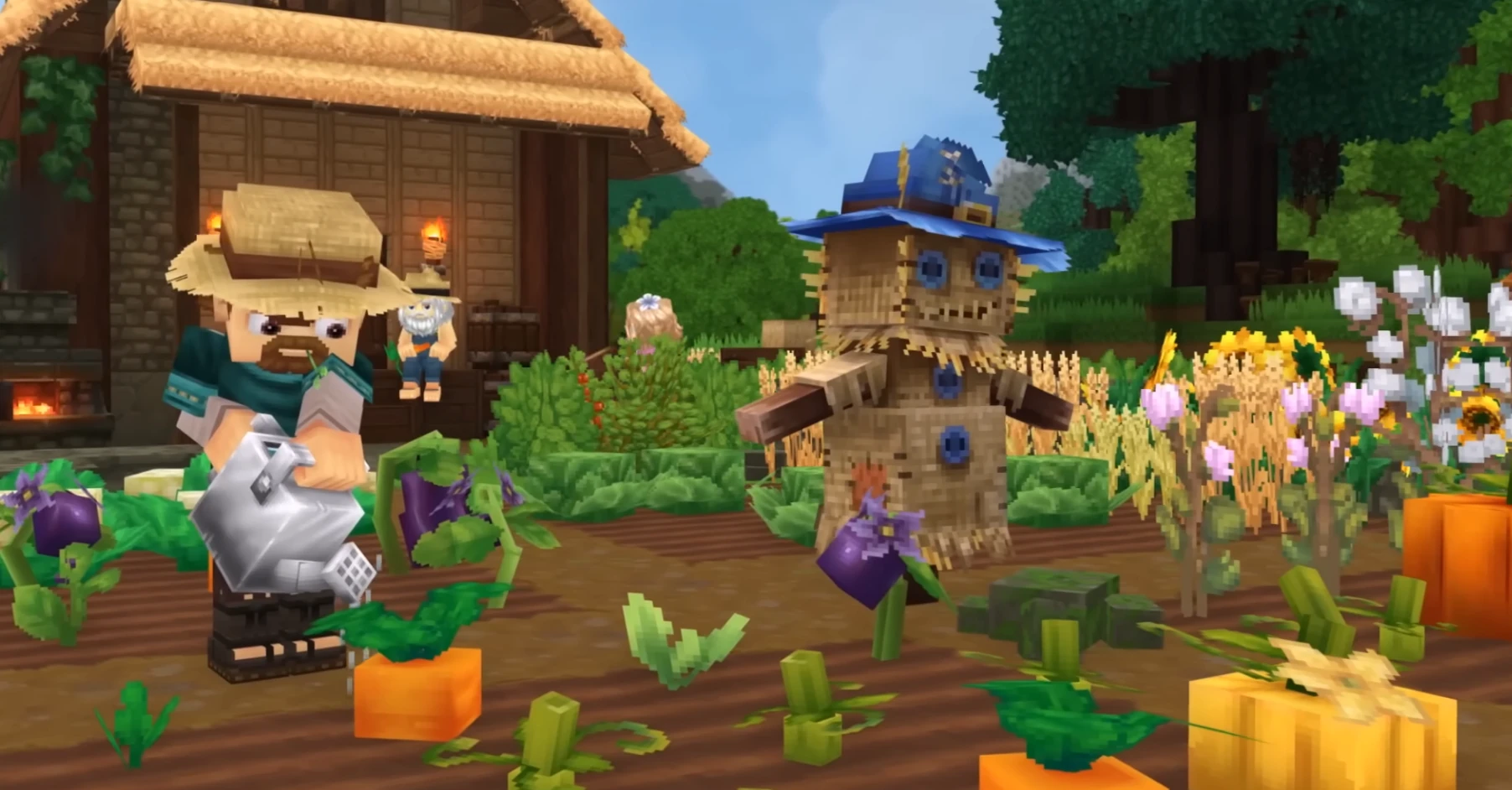
If you want the single biggest medium-term milestone, it’s this:
Two world generators, one planned handoff
Hytale’s World Generation post states:
- V1 (2016-2020) is the current playable base and will ship Exploration mode first.
- V2 (in development since 2021) is intended to fully replace V1 when ready.
They describe a phased approach:
- Early Access launches on V1 because it already has biomes and content ready.
- V2 content can appear earlier via “Gateways” as fragments of Orbis.
- Once Orbis on V2 is ready, V2 becomes the primary generator; V1 stops generating new chunks, but older worlds remain accessible.
“Intentional procedural” design
They emphasize curated procedural generation–designer control, heuristics, pattern scanning systems–and the idea that V2 enables creators to make advanced changes without coding using a node editor.
Roadmap take
A realistic “Orbis transition roadmap” looks like:
- Stabilize Early Access on V1 (content + systems)
- Expand creator-facing V2 tooling and docs
- Ship more V2 “fragment” experiences via Gateways
- Begin broader testing in pre-release builds for Orbis-on-V2
- Flip the switch: V2 becomes the primary worldgen
That’s the clearest sequential roadmap described in any official material.
6) Roadmap pillar #4: Systems expansion (magic, social, narrative expectations)
Magic / mana system (planned, not fully in yet)
In post-launch coverage, the developers have indicated that some early additions (like necromancy-themed items) aren’t the final “magic system,” and that a proper mana/spell system is planned.
Treat this as directionally confirmed (they’re talking about it), but details/timing remain fluid.
Social features
The launch-era messaging mentions prototypes of social features such as friend lists and proximity voice chat being in development.
This suggests a future roadmap lane around multiplayer UX: discovery, invites, moderation/admin, and “stickiness” features needed for community servers.
Narrative and lore: expectation-setting rather than promises
The lore/philosophy blog is mainly a reset of expectations–especially clarifying that concept art isn’t a promise and that not everything shown historically will become canon.
Roadmap implication: narrative content will expand, but they’re intentionally cautious about over-committing specifics publicly.
7) Roadmap pillar #5: Platforms and distribution
The official FAQ provides some of the clearest “yes/no” answers:
Steam: “No, not initially”
The team says Early Access won’t launch on Steam at first, explaining they want to iterate with the existing community and avoid cold first impressions steering development too aggressively. They also mention Steam compatibility constraints for some modding features as part of the reason it’s not immediate.
Consoles: “later stage”
They describe console plans as later and requiring significant backend work; priority is making a good game first.
PC platforms: Windows now, others TBD
Their revival-era messaging and Early Access announcement frame Windows as the primary launch target, with Linux/Mac attempted (status TBD).
Roadmap take: platform expansion is real, but it’s downstream of stabilizing core systems and creator tooling.
8) A practical roadmap view for players, creators, and server owners
If you’re a player
Expect:
- Frequent balance changes, QoL improvements, and content tuning (sometimes disruptive).
- Core loop refinement: combat feel, progression, exploration rewards, and stability.
If you’re a creator/modder
Expect:
- Improving docs and tutorials
- More stable APIs over time (but also periodic breaking changes early)
- A major creative expansion when V2 worldgen tools mature and Orbis-on-V2 becomes the baseline
If you run a server/community
Expect:
- Rapid patch cadence (meaning frequent update cycles for servers)
- Multiplayer/social improvements to become increasingly important (friend lists, voice proximity prototypes)
- Better tooling for content distribution and mod management as Early Access matures
9) What to watch for (roadmap “signals”)
Because the developers are intentionally not locking a rigid schedule, the best way to track the roadmap is by watching for these signals in official posts:
- Worldgen V2 milestones: more Gateway access, pre-release Orbis testing, V2 becoming default.
- Creator documentation drops: first-party tutorials and system docs expanding beyond introductory posts.
- Patch cadence stabilization: shifting from frantic hotfixing to a predictable release rhythm.
- Platform clarity: Linux/Mac status, Steam re-evaluation, console backend work starting.
- “Big system” announcements: formal magic/mana systems, deeper social tools, and larger content arcs.
Conclusion: the real Hytale roadmap is a sequence, not a calendar
Right now, Hytale’s roadmap is best understood as a dependency stack:
1) Stabilize the Early Access core with rapid updates
2) Strengthen the creator ecosystem (tools + docs + modular assets)
3) Expand the world via V2 and eventually transition Orbis to V2 as primary
4) Grow major systems (social, magic, deeper content)
5) Only then: broaden platforms and storefront strategy
If you want one sentence to summarize it: Hytale is roadmap-driven by foundations (engine/tools/worldgen) first, then content and platforms–while using Early Access feedback to decide the exact order and pacing.